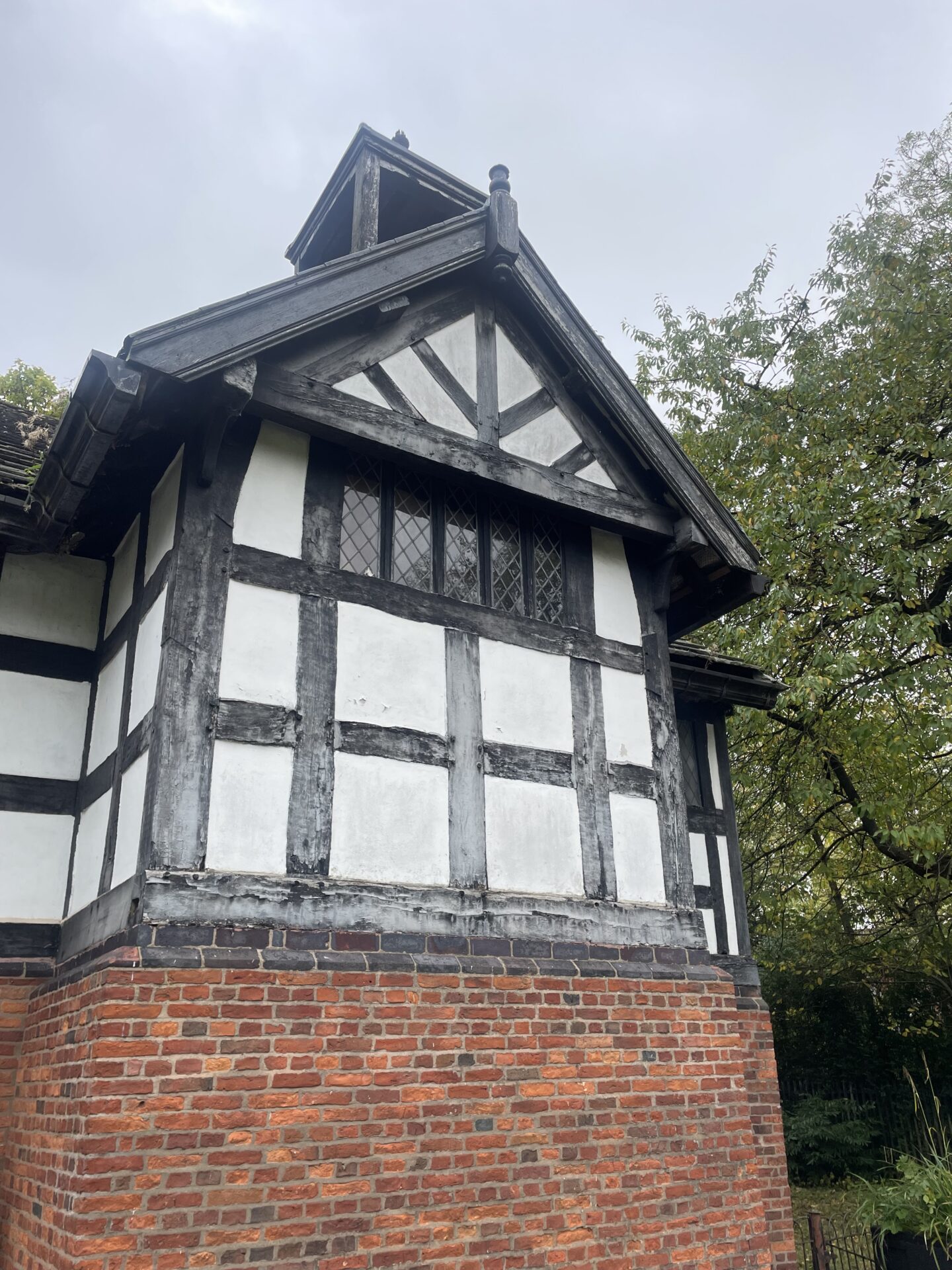
Set within a secluded park off Ashton New Road, Clayton Hall is one of Manchester’s most historically significant buildings—a rare surviving 15th-century moated manor house. The structure sits on a scheduled ancient monument, making it an exceptional example of a medieval domestic site.
Quadriga was appointed to undertake critical conservation works to arrest deterioration and stabilise the building, ensuring its long-term survival and enabling future restoration for community use.
- Full access scaffold design for façade, roof and chimney works
- Specialist DOFF cleaning of all elevation
- Remove vegetation and de-vegetate masonry. Vegetation removal and careful de-vegetation of masonry
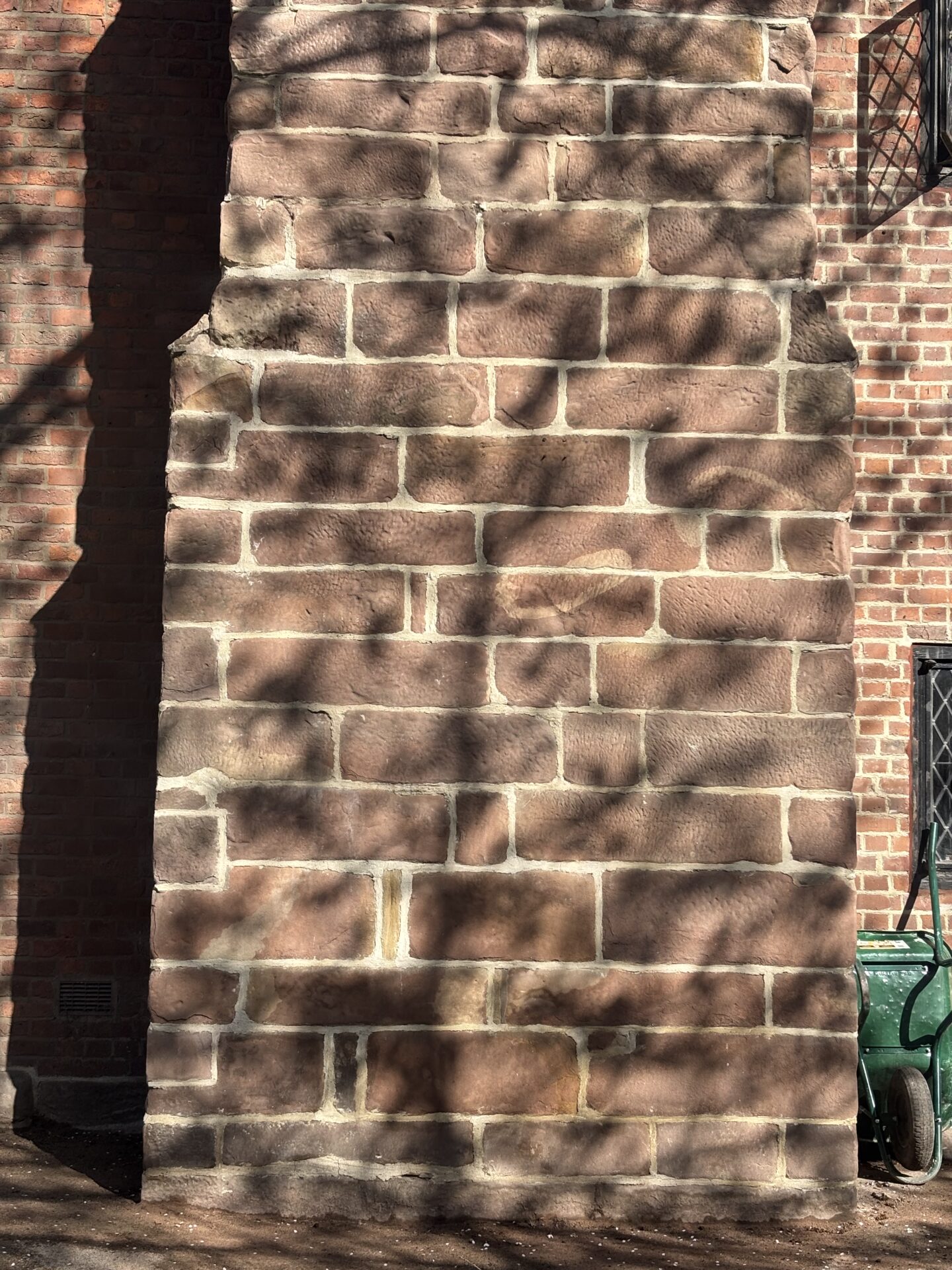
- Extensive lime-based repointing and mortar repairs
- Targeted brick replacement and stone repair across all elevations
- Reconstruction of south elevation gable
- Stone repairs to all elevations.
- Timber window repairs and frame sealing
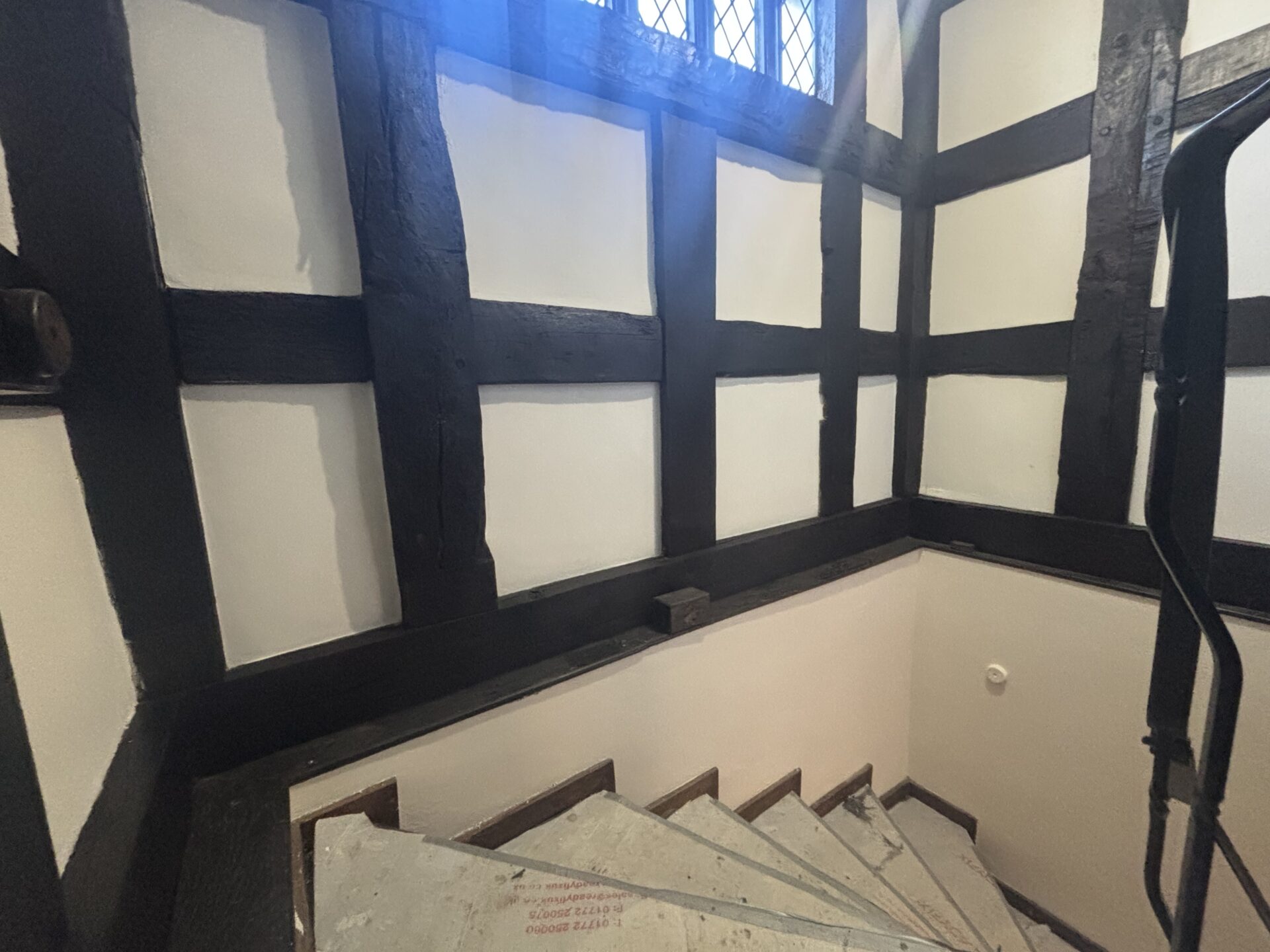
- Structural timber frame repairs, including installation of new oak elements
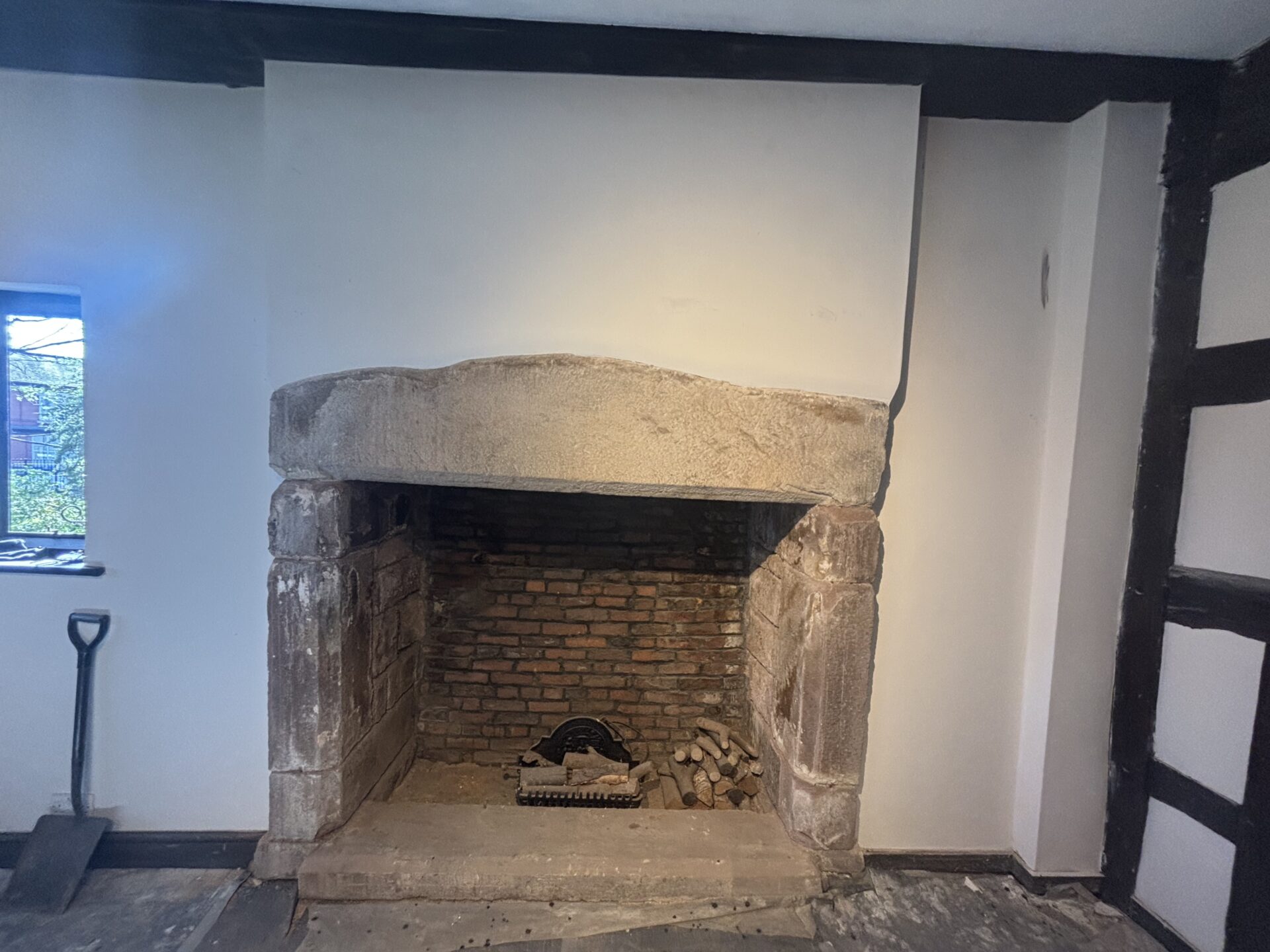
- Lime render infill panels and internal lime plastering
- Installation of leadwork detailing to improve weathering performance
- Crack stabilization using Helibar reinforcement
- Removal of inappropriate modern materials
- Introduction of discreet structural steel support where required
Delivery Approach
By the time of intervention, the building was suffering from;
Structural movement and cracking across masonry elevations
Deterioration of timber frame and infill panels
Water ingress due to defective roof and rainwater goods
Vegetation growth accelerating decay of historic fabric
Working on a Grade II* listed building demanded a methodical and conservation-led methodology
Quadriga’s approach included:
- Early-stage condition surveys and make-safe works to mitigate immediate risks
- Controlled dismantling of unstable elements, followed by careful reconstruction using traditional materials
- Close collaboration with the design team to ensure historical accuracy and compliance
- Robust quality assurance, including: Photographic recording throughout, inspection and test plans and structured snagging and defect tracking.
All works were carried out with a deep understanding of the building’s sensitive historic fabric and significance.
Outcome
The project successfully;
Stabilised and secured the structure, making it watertight
Safeguarded the building’s heritage significance
Prevented further deterioration of key historic elements
Created a clear pathway for future restoration and adaptive reuse
The works demonstrate Quadriga’s ability to respond rapidly to heritage at risk, combining traditional craftsmanship with modern structural solutions to delivery sustainable conservation outcomes.