Case Study: The Medieval Keep, Lancaster Castle
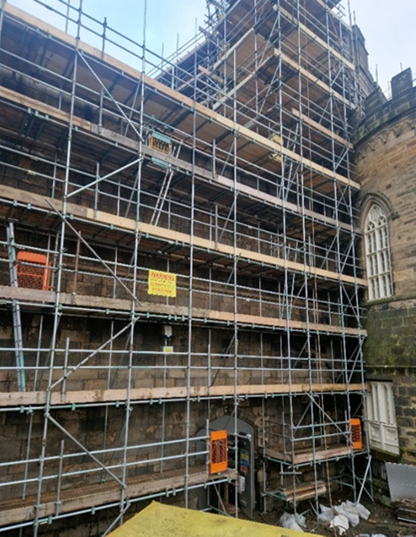
Quadriga was appointed Principal Contractor for the essential repair and conservation of the Medieval Keep at Lancaster Castle — one of England’s most significant historic fortifications and a Grade I listed structure of national and international importance.
Positioned on a hilltop site with origins dating back nearly 1,000 years, the Castle has evolved from a Roman fort into a Norman stronghold, later serving as a court, prison, and symbol of royal authority. At its heart, the Keep — constructed in the 12th century — forms the oldest surviving element of the Castle and historically acted as its final line of defence.
Commissioned by the Duchy of Lancaster, this project represents a key phase in the Castle’s long-term conservation strategy, safeguarding its structural integrity, improving environmental performance, and ensuring continued public accessibility for future generations.
Scope of Works
The project involved comprehensive conservation and specialist restoration of the Keep’s structure, envelope, and internal fabric, including:
- Reordering of the roof structure and installation of a new natural slate roof, sensitively integrating photovoltaic panels
- Manufacture and installation of pure iron handrails and balustrades
- Traditional lime plasterwork
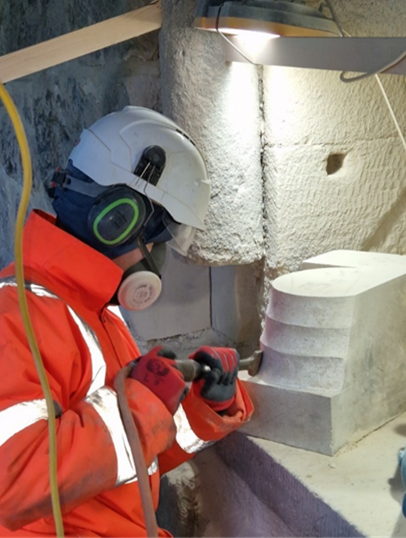
- Masonry repairs, including indents and stone replacement
- Lime pointing throughout
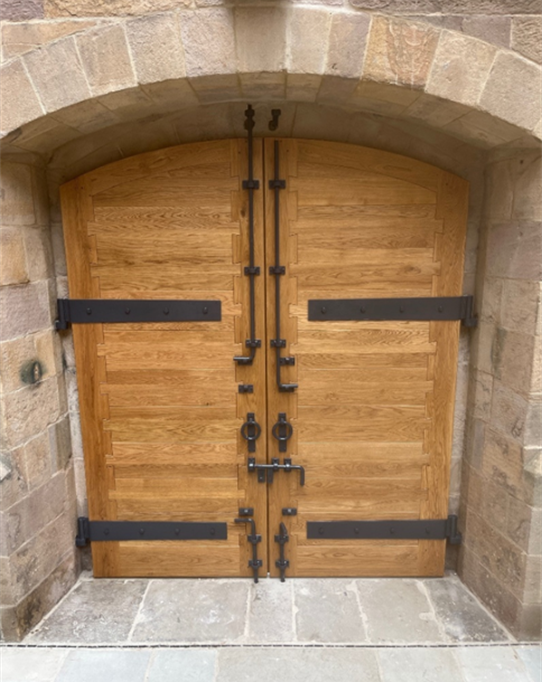
- Manufacture and installation of bespoke oak timber windows
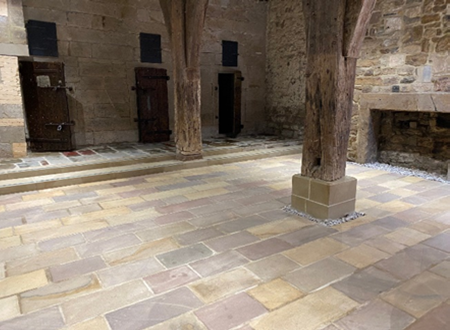
- Hard landscaping using reclaimed York stone flags
- Repair and replacement of rainwater goods
- Lowering and capping of redundant chimneys
All works were carried out using traditional materials and techniques appropriate to the building’s historic significance.
Circular Economy and Sustainability
Circular economy principles were embedded throughout the project, prioritising material retention, reuse, and minimal intervention.
This approach resulted in a measured saving of 2,256.1 kg CO₂e, achieved through the reuse of existing materials, retention of embodied carbon, and minimisation of construction waste.
Challenges and Solutions
The Castle remained open to the public and in active use throughout the works. Quadriga implemented carefully managed logistics, including controlled access routes, noise mitigation strategies, and robust protection measures to ensure zero disruption to visitors and adjacent operations.
Given the archaeological sensitivity of the site, all excavations were undertaken under specialist archaeological supervision. Historic fabric was recorded in situ, with any findings carefully documented prior to reinstatement.
Skills, Heritage, and Community Engagement
Recognising the importance of skills development within the heritage sector, Quadriga used the project as a platform for training and knowledge-sharing.
- The site was opened to heritage apprentices from organisations across the North of England in collaboration with Historic England, providing hands-on experience in traditional conservation techniques
- The team engaged with students at Lancaster and Morecambe College, delivering talks on careers in heritage construction
- Work experience opportunities were offered to support the next generation entering the industry
Outcomes and Impact
The Medieval Keep has been successfully restored to a stable, watertight, and historically authentic condition, securing its future as a landmark of exceptional heritage value.
Through a combination of technical excellence, sensitive conservation, and meaningful community engagement, the project not only preserves an irreplaceable historic asset but also contributes to the ongoing development of traditional skills within the sector.