

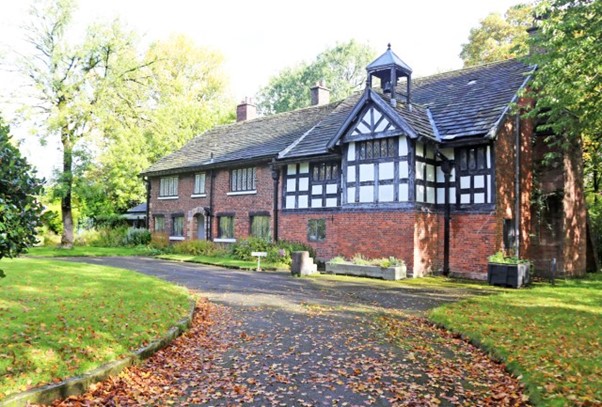
Clayton Hall Regeneration Works
16th Dec 2025
We’re excited to share a first look at our ongoing heritage conservation works at Clayton Hall.
Clayton Hall—a moat-surrounded, Grade II* listed medieval manor—has stood in this location since the 12th century, evolving over time into the timber-framed and brick-built structure we see today. It remains one of Manchester’s most significant historic landmarks.
Quadriga Contracts Ltd has been appointed to deliver a specialist package of heritage repair, conservation and structural works as part of Manchester City Council’s regeneration programme.
What our team is delivering
Using traditional methods and materials, our teams are undertaking key conservation tasks including:
- Early enabling works including trial paint removal, mortar analysis and preliminary investigations
- Careful dismantling and reconstruction of historic boundary walling, with full salvage, cleaning and reuse of original masonry
- High-level roof and eaves inspections, and heritage roofing specialist surveys
- Vegetation removal from gutters, chimneys and gulleys to prevent ongoing damage to historic fabric
- Render and paint removal, followed by mortar and stone analysis to ensure authentic repointing and repair mixes
- Extensive timber frame repairs, including splice repairs, soleplate replacement, metal brackets, oak inserts and structural strengthening details
- Internal plaster conservation, floorboard investigations and reinstatement, and adjustments to internal doors impacted by movement
Challenges of working on a medieval structure
Conserving a building with nearly 900 years of history brings unique complexities, many of which our teams have been navigating on site, including:
- Working around fragile, irreplaceable historic fabric, requiring every intervention—whether dismantling masonry or lifting floorboards—to be done by hand and with conservation oversight.
- Unknown conditions revealed during opening-up, such as concealed timber deterioration or structural movement, requiring provisional allowances, heritage engineer input and responsive sequencing.
- Restricted access and scaffold controls, including high-level inspections, boarded scaffold bases for protection, and strict rules around working at height and temporary works design.
- Material authenticity, ensuring all repairs (lime mortars, oak sections, structural ties, fixings, etc.) comply with heritage specifications and are fully recorded for conservation archives.
These challenges highlight the skill, care and patience required in specialist conservation—qualities our heritage teams demonstrate every day.
Preserving Clayton Hall for future generations
We’re proud to be playing a key role in safeguarding such an important part of Manchester’s story. With work progressing well, we look forward to sharing more updates and imagery as the project continues.
Back to Blog